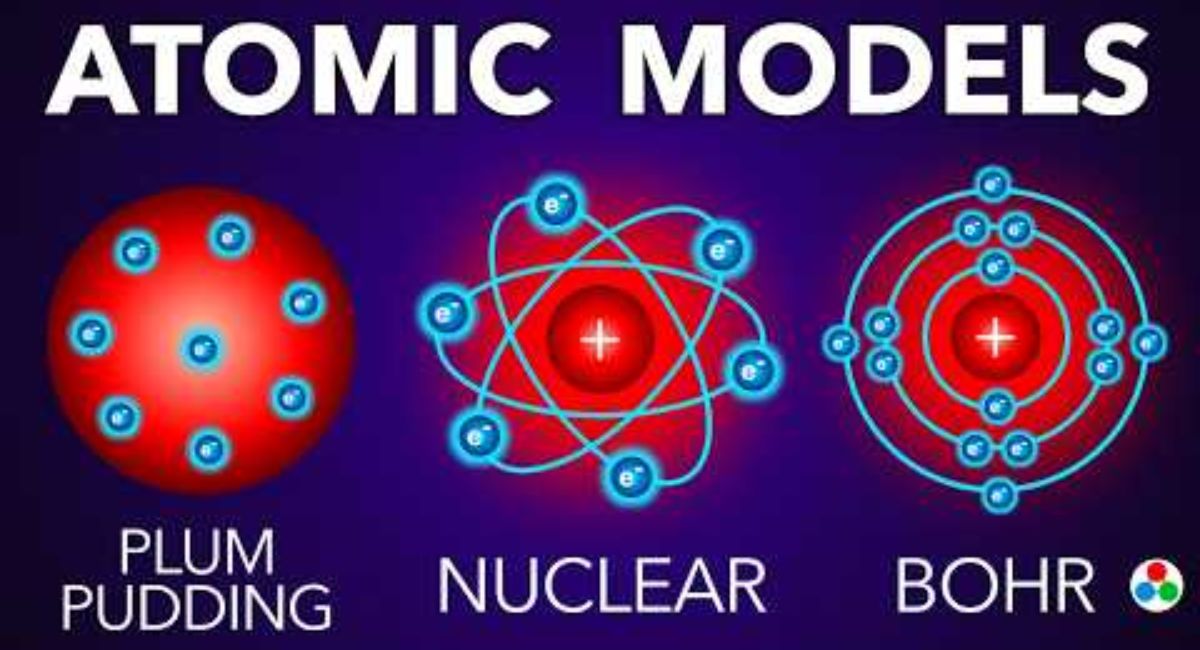
Atomic Models Explained- Types, History, and Modern Atomic Theory
Everything around us, from the air we breathe to the devices we use every day, is made of matter. Scientists discovered that all matter is built from tiny particles called atoms. However, understanding the structure of an atom was not easy. Over hundreds of years, scientists created different atomic models to explain what atoms look like and how they behave.
- What Is an Atomic Model?
- Why Did Atomic Models Change Over Time?
- Early Ideas About Atoms
- Dalton’s Atomic Model (1803)
- Thomson’s Atomic Model (1897)
- Rutherford’s Atomic Model (1911)
- Bohr’s Atomic Model (1913)
- Quantum Mechanical Atomic Model (Modern Atomic Model)
- Comparison of Atomic Models
- Importance of Atomic Models in Modern Science
- FAQ’s
- Conclusion
- Related post
Each new discovery helped improve previous ideas and brought scientists closer to the modern understanding of atomic structure. From the simple solid sphere idea to the advanced quantum mechanical model, atomic models show how science develops through experiments and discoveries.
In this article, we will explore the major atomic models, their scientists, their importance, and how they changed our understanding of matter.
Learn about atomic models, their history, types, and evolution from Dalton to the modern quantum model with simple explanations and comparisons.
What Is an Atomic Model?
An atomic model is a scientific explanation or representation that describes the structure and behavior of an atom. Since atoms are extremely small and cannot be seen directly with ordinary tools, scientists use models to understand their internal parts.
Atomic models help explain important questions such as:
- What particles exist inside an atom?
- How are electrons arranged?
- Why do elements have different properties?
- How do atoms combine to form compounds?
Scientists continue improving atomic models whenever new experimental evidence becomes available.
Why Did Atomic Models Change Over Time?

Scientific knowledge is not fixed. When scientists discover new information, older explanations may need improvement.
Early scientists believed atoms were simple, indivisible particles. Later experiments showed that atoms contain smaller particles such as electrons, protons, and neutrons.
For example:
- Dalton believed atoms were solid particles.
- Thomson discovered electrons inside atoms.
- Rutherford found that atoms contain a central nucleus.
- Bohr explained electron energy levels.
- Modern scientists developed the quantum model to describe electron behavior more accurately.
The changes in atomic models represent the progress of scientific understanding.
Early Ideas About Atoms
Democritus Atomic Idea
The earliest known idea about atoms came from ancient Greek philosophers. Democritus suggested that all matter was made of extremely tiny particles called “atomos,” meaning indivisible.
He believed these particles were too small to be seen and that different materials were made from different types of atoms.
Although this idea was based on reasoning rather than experiments, it introduced the basic concept that matter has tiny building blocks.
However, scientists needed experimental evidence before atomic theory could become accepted.
Dalton’s Atomic Model (1803)
The Solid Sphere Model
John Dalton was the first scientist to develop a scientific atomic theory based on experiments. He suggested that atoms were tiny, solid particles that could not be divided.
According to Dalton’s model:
- All matter is made of atoms.
- Atoms of the same element have similar properties.
- Different elements contain different types of atoms.
- Atoms combine in specific ratios to form compounds.
Dalton’s model helped scientists understand chemical reactions and became the foundation of modern atomic theory.
Limitations of Dalton’s Model
Later discoveries showed that atoms are not indivisible. Scientists found smaller particles inside atoms, including electrons and other subatomic particles.
Thomson’s Atomic Model (1897)
The Discovery of Electrons
After Dalton’s model, scientists started performing more advanced experiments to understand the internal structure of atoms. In 1897, British physicist J.J. Thomson discovered the electron, proving that atoms were not simple, indivisible particles.
Thomson proposed a new atomic model based on his discovery. He suggested that an atom was a positively charged sphere containing negatively charged electrons inside it.
This model became known as the Plum Pudding Model because Thomson compared the electrons to small particles spread throughout a positive substance, similar to fruits placed inside a pudding.
Main Ideas of Thomson’s Model:
- Atoms contain negatively charged electrons.
- Positive charge is spread throughout the atom.
- Electrons are embedded inside the positive region.
- The total positive and negative charges balance each other.
Limitations of Thomson’s Model
Although Thomson’s model explained the existence of electrons, it could not explain how positive charge was arranged inside the atom. Later experiments showed that atoms have a small, dense nucleus, which proved Thomson’s model incomplete.
Rutherford’s Atomic Model (1911)
Discovery of the Atomic Nucleus
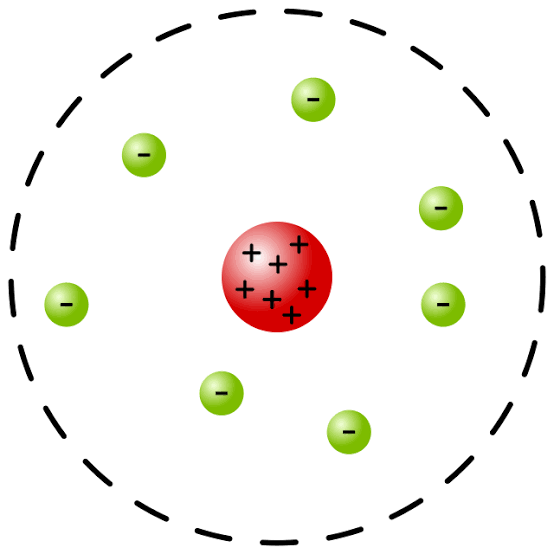
Ernest Rutherford changed the understanding of atoms through his famous gold foil experiment. He directed positively charged alpha particles toward a thin sheet of gold and observed how they moved.
Most particles passed straight through the foil, but a few particles changed direction or bounced back.
This unexpected result led Rutherford to a new conclusion:
- Atoms contain a small, dense, positively charged center called the nucleus.
- Most of the atom is empty space.
- Electrons move around the nucleus.
Main Features of Rutherford’s Model:
- The nucleus contains positive charge.
- Electrons revolve around the nucleus.
- The nucleus contains most of the atom’s mass.
- The size of the nucleus is much smaller than the entire atom.
Limitations of Rutherford’s Model
Rutherford’s model explained the nucleus, but it could not explain why moving electrons did not lose energy and fall into the nucleus. This problem led scientists to search for a better explanation.
Bohr’s Atomic Model (1913)
Understanding Electron Energy Levels
Niels Bohr improved Rutherford’s model by introducing the idea of fixed energy levels. He suggested that electrons do not move randomly around the nucleus. Instead, they exist in specific paths or shells with fixed amounts of energy.
According to Bohr’s model:
- Electrons move in specific energy levels around the nucleus.
- Electrons can move between energy levels by absorbing or releasing energy.
- Each energy level has a specific distance from the nucleus.
Example:
Think of electron shells like floors in a building. An electron can move from one floor to another, but it cannot stay between two floors.
Importance of Bohr’s Model
Bohr’s model successfully explained the behavior of hydrogen atoms and helped scientists understand how electrons are arranged.
Limitations of Bohr’s Model
Bohr’s model worked well for simple atoms but could not accurately explain atoms containing many electrons.
Quantum Mechanical Atomic Model (Modern Atomic Model)
The Current Understanding of Atoms
The modern atomic model developed through the work of scientists such as Erwin Schrödinger and other researchers studying quantum mechanics.
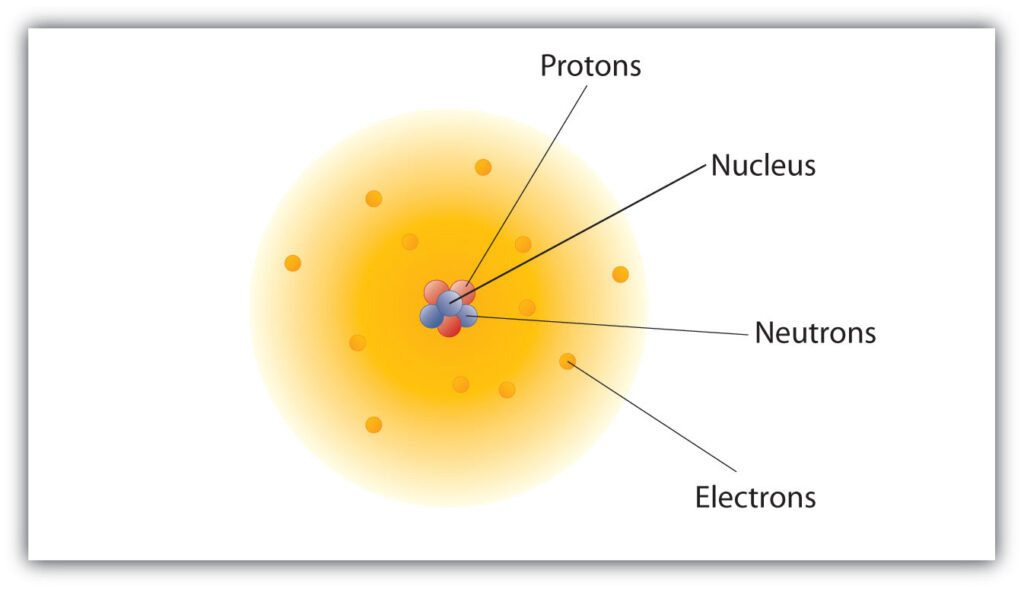
Unlike earlier models, the quantum model does not describe electrons moving in fixed paths. Instead, it explains that electrons exist in areas called electron clouds, where they are most likely to be found.
Main Features of the Quantum Model:
- Electrons behave like both particles and waves.
- Their exact location cannot always be predicted.
- Electrons exist in probability regions called orbitals.
- The model provides the most accurate explanation of atomic structure today.
The quantum mechanical model is currently accepted because it explains the behavior of atoms more accurately than earlier models.
Comparison of Atomic Models
| Atomic Model | Scientist | Main Idea | Major Problem |
| Ancient Atomic Idea | Democritus | Matter is made of tiny particles | No experimental evidence |
| Dalton Model | John Dalton | Atom is a solid sphere | Did not include smaller particles |
| Thomson Model | J.J. Thomson | Electrons exist inside positive charge | No nucleus explanation |
| Rutherford Model | Ernest Rutherford | Atom has a central nucleus | Could not explain electron stability |
| Bohr Model | Niels Bohr | Electrons exist in energy levels | Limited for complex atoms |
| Quantum Model | Erwin Schrödinger | Electrons exist in probability clouds | More complex to understand |
Importance of Atomic Models in Modern Science
Atomic models are not only theories from textbooks; they play an important role in modern technology and science.
They help scientists understand:
- Chemical reactions
- Formation of compounds
- Development of medicines
- Electronics and computer technology
- Nuclear energy
- New materials
Without atomic models, many scientific discoveries and modern technologies would not be possible.
FAQ’s
1. What is an atomic model?
An atomic model is a scientific explanation that describes the structure and behavior of an atom.
2. Who created the first scientific atomic model?
John Dalton created the first scientific atomic model in the early 1800s.
3. Why did atomic models change?
Atomic models changed because new experiments revealed more information about atoms.
4. Which atomic model is accepted today?
The quantum mechanical model is the currently accepted model of the atom.
5. How many major atomic models are there?
The major atomic models include Dalton’s, Thomson’s, Rutherford’s, Bohr’s, and the modern quantum model.
Conclusion
Atomic models show how scientific discoveries improve our understanding of matter. From Dalton’s solid sphere model to the modern quantum theory, each model contributed valuable knowledge about atomic structure. Although earlier theories had limitations, they created a foundation for future research. Today, the quantum model remains the most accurate explanation of atoms and supports modern science.