
What Is Cross-Platform Software and How It Works Guide
Cross-platform software is a type of application that runs on multiple operating systems such as Windows, macOS, Linux, Android, and iOS without needing separate versions for each system. It is widely used in modern software development because it helps developers save time, reduce costs, and reach a larger number of users. Understanding what cross-platform software is makes it easier to see how modern applications are built to work smoothly across different devices and platforms.
Learn what is cross-platform software, its features, benefits, and how it works across Windows, macOS, Android, and iOS using a single codebase.
- What Is Cross-Platform Software?
- How Cross-Platform Software Works
- Features of Cross-Platform Software
- Types of Cross-Platform Software
- Advantages of Cross-Platform Software
- Disadvantages of Cross-Platform Software
- Cross-Platform vs Native Software
- Why Cross-Platform Software Is Popular
- Real-Life Examples
- Future of Cross-Platform Software
- FAQ’s
- Conclusion
- Related post
What Is Cross-Platform Software?
Cross-platform software refers to applications that are designed to work on different operating systems using a single codebase.
Instead of creating separate applications for each platform, developers write one program that can run on multiple systems such as Windows, macOS, Linux, Android, and iOS with only minimal changes.
This approach helps reduce development time, lower costs, and makes software easier to maintain and update while ensuring a consistent user experience across all devices.
Supported Platforms
- Windows
- macOS
- Linux
- Android
- iOS
This flexibility makes it very popular in modern development.
How Cross-Platform Software Works
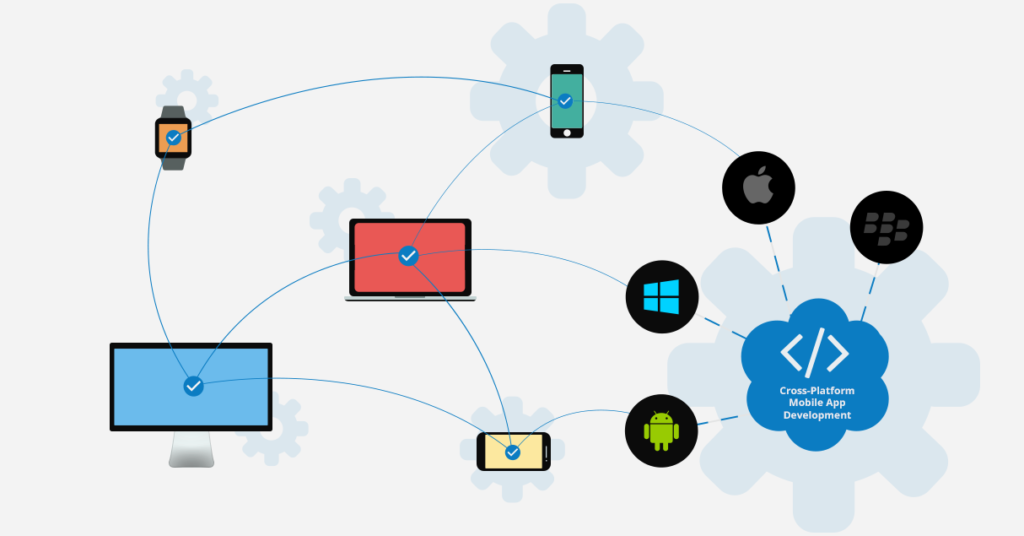
Cross-platform software works using special tools, libraries, and frameworks that allow a single codebase to run smoothly on multiple operating systems.
These frameworks act as a bridge between the application and the operating system, converting the same code into a format that different platforms like Windows, macOS, Android, and iOS can understand.
This helps developers build applications faster while ensuring compatibility, performance, and consistency across all devices without rewriting the entire program for each system.
Popular Development Tools
- Flutter
- React Native
- Xamarin
- Electron
- Unity
These tools convert code into platform-compatible applications.
Features of Cross-Platform Software
Cross-platform applications come with powerful features that make them highly efficient, flexible, and scalable for modern software development.
These applications allow developers to use a single codebase while ensuring smooth performance across different operating systems like Windows, macOS, Android, and iOS.
They also support faster development cycles, easier maintenance, and consistent user experience, which makes them a popular choice for businesses and developers who want to reach a wider audience with less effort and cost.
Key Features
- Single codebase for multiple platforms allows developers to write one set of code that runs on different operating systems, reducing duplication and making development more efficient.
- Faster development process helps teams build and launch applications quickly because they do not need to create separate versions for each platform.
- Cost-effective solution reduces overall development and maintenance expenses since one project works across multiple devices instead of multiple native apps.
- Easy updates and maintenance make it simple to fix bugs and add new features because changes are applied to a single codebase.
- Consistent user experience ensures that the app looks and works similarly on all platforms, improving usability and user satisfaction.
- Wide audience reach allows businesses to target users on different devices and operating systems, increasing app visibility and engagement.
These features make it ideal for businesses and developers.
Types of Cross-Platform Software
Cross-platform software can be used in different areas depending on the requirement.
Mobile Applications
Apps that run on both Android and iOS using one codebase.
Desktop Applications
Software that works on Windows, macOS, and Linux systems.
Web Applications
Browser-based apps that run on all operating systems.
Games
Games developed using engines like Unity and Unreal Engine.
Advantages of Cross-Platform Software
Cross-platform development offers many benefits for both users and developers.
Main Benefits
- Lower development cost
- Faster app development
- Easy maintenance
- Broader user reach
- Reusable code
- Quick updates across platforms
These advantages make it very popular in the tech industry.
Disadvantages of Cross-Platform Software
Despite its benefits, there are some limitations.
Limitations
- Lower performance than native apps
- Limited access to advanced device features
- UI differences across platforms
- Framework dependency
These issues can affect performance-heavy applications.
Cross-Platform vs Native Software
Understanding the difference helps choose the right development approach.
Cross-Platform Software
- One codebase for all platforms
- Faster development
- Lower cost
Native Software
- Separate apps for each platform
- Better performance
- Full access to device features
Why Cross-Platform Software Is Popular
Cross-platform software is popular because:
- Companies want faster development
- Users use multiple devices
- Businesses want cost savings
- Maintenance is easier with one codebase
Real-Life Examples
Many popular apps use cross-platform technology.
Examples
- Skype
- Spotify
- Slack
These apps work smoothly across multiple platforms.
Future of Cross-Platform Software
The future of cross-platform development is very strong and continuously evolving. With advanced frameworks, improved tools, and AI integration, developers can now build applications that are faster, more efficient, and much closer to native performance.
Modern technologies are reducing the gap between cross-platform and native apps, making it easier to deliver high-quality user experiences across all devices.
In the coming years, cross-platform development is expected to become even more powerful, flexible, and widely adopted in the software industry.

Future Improvements
- Better performance optimization
- Improved UI consistency
- Stronger security features
- More native-like experience
FAQ’s
1. What is cross-platform software in simple words?
Cross-platform software is an application that works on multiple operating systems like Windows, Android, and iOS using a single codebase, without needing separate versions.
2. Why do developers use cross-platform software?
Developers use it to save time, reduce cost, and reach more users by building one application that runs on different devices and platforms.
3. What are common examples of cross-platform software?
Popular examples include WhatsApp, Instagram, Spotify, Skype, and Slack, which work on both mobile and desktop platforms.
4. Is cross-platform software better than native software?
It depends on the project. Cross-platform is better for speed and cost, while native software is better for performance and full device control.
5. Which tools are used for cross-platform development?
Common tools include Flutter, React Native, Xamarin, Electron, and Unity, which help developers build apps for multiple platforms easily.
Conclusion
Cross-platform software is a powerful development approach that allows applications to run on multiple operating systems using a single codebase. It reduces development cost, saves time, and increases reach. Although it has some limitations, its benefits make it one of the most widely used methods in modern software development. Understanding what cross-platform software is helps you see how today’s apps are built for a connected digital world.