Construction Management Software- Complete Guide (2026)
Construction management software is a digital solution designed to help construction companies plan, organize, and control projects in a structured way. It combines multiple functions like scheduling, budgeting, document handling, communication, and reporting into one centralized platform. This reduces manual work and improves efficiency across all stages of a construction project.
- Key Features of Construction Management Software
- Benefits of Construction Management Software
- How Construction Management Software Works
- Types of Construction Management Software
- Cost Management Software
- Industries That Use Construction Management Software
- Best Practices for Using Construction Management Software
- Challenges of Construction Management Software
- Popular Construction Management Software Tools
- Future of Construction Management Software
- FAQs
- Conclusion
- Related Post
In modern construction, projects are more complex than ever. There are multiple teams, strict deadlines, and large budgets involved. Managing all of this manually can lead to errors, delays, and cost overruns. Construction management software solves these issues by providing real-time visibility and better coordination between office staff and on-site teams.
Construction management software helps manage projects efficiently but faces challenges like setup complexity, training needs, and integration issues.
Key Features of Construction Management Software
Construction management software includes several powerful features that help simplify project execution.

- Project planning and scheduling tools
- Budgeting and cost estimation system
- Resource allocation and tracking
- Document storage and version control
- Real-time communication and messaging
- Task assignment and progress tracking
- Risk identification and reporting tools
- Mobile access for field workers
- Cloud-based data storage
- Integration with accounting and ERP systems
These features ensure that every part of a construction project is properly managed and nothing is missed during execution.
Benefits of Construction Management Software
- Improves project efficiency and speed
- Reduces delays and cost overruns
- Enhances team communication and collaboration
- Provides real-time project visibility
- Reduces manual paperwork and errors
- Improves resource planning and utilization
- Helps in better decision-making
- Ensures timely project delivery
- Increases overall productivity
- Improves project quality and control
How Construction Management Software Works
- Improves project efficiency and workflow speed
- Reduces delays, errors, and cost overruns
- Enhances team communication and coordination
- Provides real-time project tracking and updates
- Reduces paperwork and manual tasks
- Improves resource allocation and utilization
- Helps in better planning and decision-making
- Increases overall productivity and project quality
- Ensures timely project completion
- Strengthens project control and management
Types of Construction Management Software
Different types of construction management software are used depending on project needs.
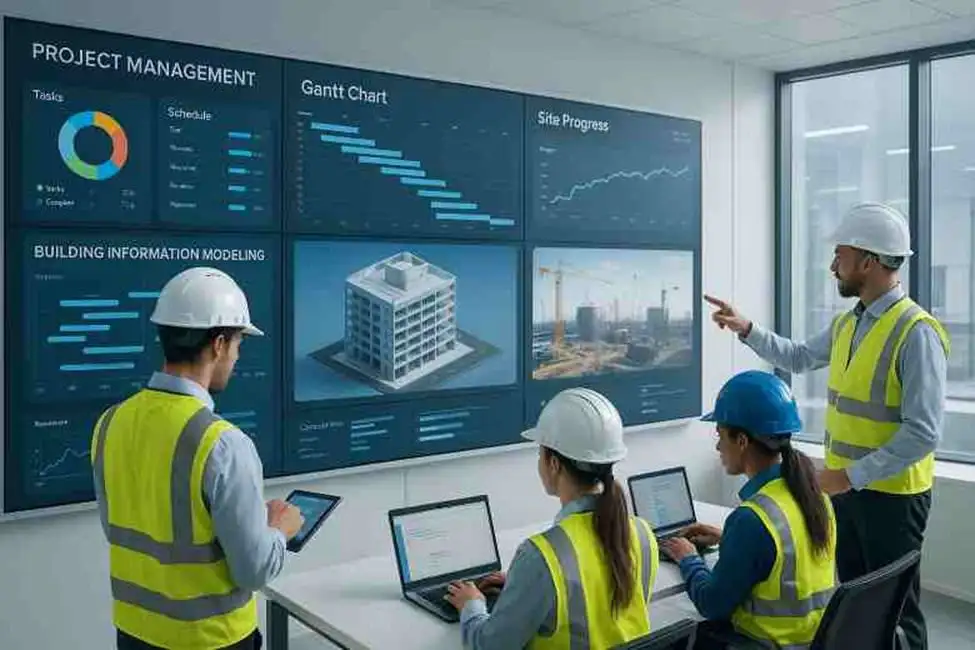
Project Planning Software
Project planning software is used to create schedules, timelines, and task distribution for construction projects. It ensures that every stage of the project is properly planned before execution begins, helping teams stay organized and on track.
Cost Management Software
Cost management software is designed for budgeting, financial planning, and expense tracking. It helps construction companies control costs, avoid overspending, and manage project finances more effectively.
Field Management Software
Field management software is used on construction sites to track progress, update tasks, and improve communication between on-site workers and office teams in real time. It improves coordination and reduces delays.
Document Management Software
Document management software stores all project-related files in a secure digital system. It allows easy access, better organization, and prevents data loss or duplication during construction projects.
Industries That Use Construction Management Software
- Residential construction companies
- Commercial building contractors
- Infrastructure development firms
- Civil engineering companies
- Real estate developers
- Government construction projects
- Industrial construction companies
- Road and bridge construction projects
- Architecture and planning firms
- Heavy engineering and utility projects
Best Practices for Using Construction Management Software

- Keep all project data updated regularly
- Train team members before full implementation
- Use automation features to save time
- Monitor project progress daily
- Set clear deadlines and responsibilities
- Integrate with accounting and HR tools
- Maintain strong communication between teams
- Use mobile apps for field updates
- Review reports and analytics regularly
- Ensure data security and backups
Challenges of Construction Management Software
Although construction management software is highly useful, it also comes with some challenges that companies need to manage carefully.
- Initial setup can be complex and time-consuming
- Employees may need proper training to use the system
- Integration with old systems can be difficult
- High cost of advanced software solutions
- Technical issues or system downtime may occur
- Resistance from staff to adopt new digital tools
- Data security risks if not properly managed
- Requires continuous maintenance and updates
Popular Construction Management Software Tools
Procore
Procore is a widely used construction management platform that helps companies manage projects, resources, and communication in one system. It is mainly designed for large construction companies to handle complex projects efficiently.
Autodesk Construction Cloud
Autodesk Construction Cloud is a construction software that combines design and construction workflows. It offers strong collaboration and document control features, making it ideal for engineering and architecture projects.
Monday.com
Monday.com is a flexible project and task management tool used in construction workflows. It helps teams track progress easily and is suitable for small to medium-sized businesses.
Future of Construction Management Software
The future of construction management software is focused on automation, artificial intelligence, and smarter project control. These systems will become more intelligent by predicting delays, managing resources automatically, and improving decision-making with real-time data.
Cloud-based platforms and mobile-first tools will make collaboration easier between on-site and office teams. In the coming years, construction software will also use AI and analytics to reduce risks, control costs, and improve project accuracy. Overall, it will make construction work faster, safer, and more efficient.
FAQs
1-What is construction management software used for?
Construction management software is used to plan, manage, and control construction projects by handling scheduling, budgeting, communication, and documentation in one system.
2-Who can use construction management software?
It can be used by contractors, engineers, architects, project managers, and construction companies to improve project efficiency and coordination.
3-Is construction management software expensive?
Some advanced tools are expensive, but there are also affordable options available for small and medium-sized construction businesses.
4-Does it improve project efficiency?
Yes, it improves efficiency by automating tasks, reducing delays, improving communication, and providing real-time project tracking.
5-Why is it important in modern construction?
It is important because it helps manage complex projects efficiently, reduces costs, improves accuracy, and ensures timely project completion.
Conclusion
Construction management software has become an essential tool for modern construction companies. It simplifies complex project workflows by centralizing planning, communication, and resource management. This leads to better efficiency, reduced costs, and improved project delivery. As technology continues to evolve, this software will play an even more important role in making construction faster, smarter, and more organized in the future.